





Supporting Children’s Emotions in Everyday Family Life
What do children need in order to better understand their emotions – and how can adults respond helpfully in these moments?
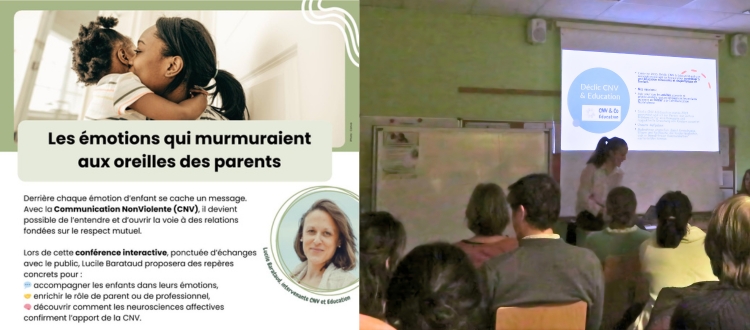
This guiding question opened a parents’ evening on dealing with children’s emotions, held on 26 March in the Early Years section of the Deutsche Schule Toulouse. The evening brought together parents and staff members interested in the topic and offered a clear, practical introduction to the principles of Nonviolent Communication.
The focus was on how adults can recognise and appropriately support children’s feelings and needs. The speaker referred to situations that regularly arise in family and school life. She explained how behaviour often reflects underlying needs that children may find difficult to express in words – and how attentive adults can help them better understand these emotions.
During the discussion, it quickly became clear how familiar many participants were with the situations described. Parents shared examples from everyday family life, while staff from the kindergarten and primary school contributed observations from the educational setting. The speaker placed these examples into context and explained how findings from neuroscience can support an empathetic approach to emotions.
This created a clear picture of how small changes in everyday interactions – such as taking a moment to listen consciously or using a neutral sentence instead of making a quick judgement – can ease situations and provide children with a sense of guidance and security.
The speaker also highlighted the importance of adults recognising their own needs and feelings in order to respond appropriately to those of the child.